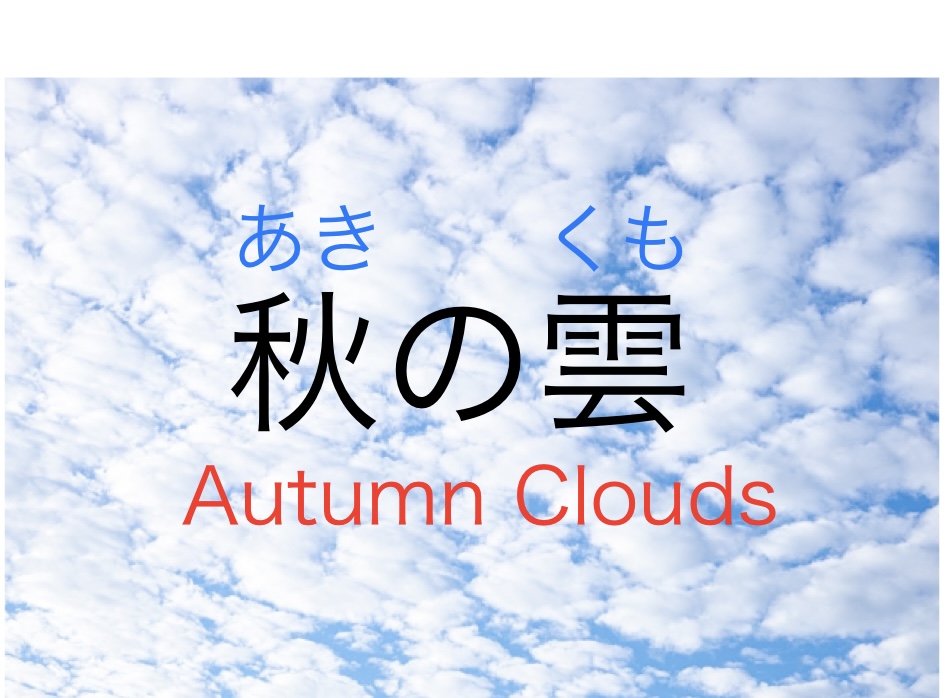

秋は、雲がよく見えますね。
秋は、空が澄みわたり、上空まで見通しやすくなります。
秋によく見ることができ、親しみやすい名前の雲にうろこ雲とひつじ雲があります。
うろこ雲は、さば雲やいわし雲ということもありますが、正しい名前は、巻積雲といいます。
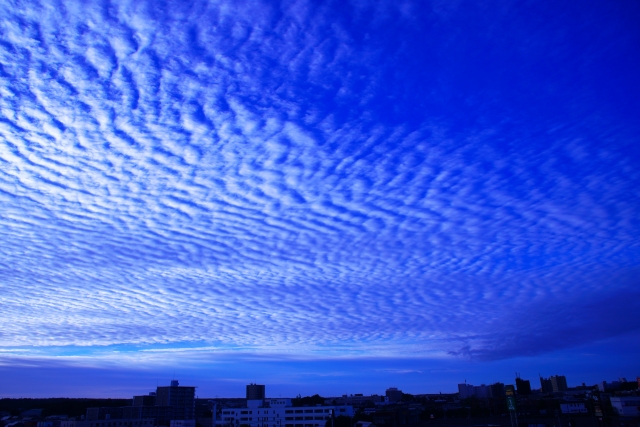
高さが、およそ5千メートルから1万5千メートルの高いところにできる雲です。
この雲は、小さなかたまりの雲がたくさん集まっています。
ひつじ雲は、正しい名前は、高積雲といいます。
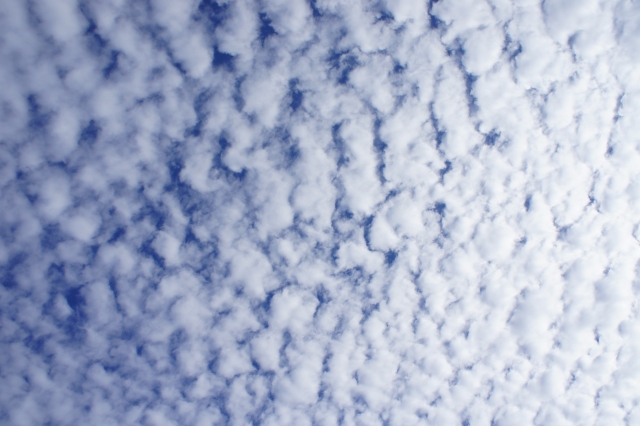
高さが、およそ2千メートルから7千メートルにできる雲です。
発生する高さが違うので、これらの雲を見かけの大きさで見分けることができます。
手を伸ばして、人差し指を1本立てます。雲のかたまりの1つ1つの雲が、人差し指でかくれた場合は、うろこ雲です。
雲のかたまりの1つ1つの雲が、人差し指から、はみ出してしまう場合は、ひつじ雲です。
ひつじ雲・うろこ雲の見分けかたにすすむ(そとにある動画)
これらの雲は、年中見ることができますが、秋によく見られるので、うろこ雲、さば雲、いわし雲、ひつじ雲という言葉は、秋の季語になっています。
雲は、うろこ雲からひつじ雲に変わり、その後、雨を降らせる乱層雲に変わることがあります。
うろこ雲が大きくなってきた時は、その後、雨雲になり、雨が降ることが多いです。
⭐️ ⭐️
次の言葉については、他のページもあわせて読んでみてください。
Autumn Clouds
In autumn, the sky is clear and the sky above is easy to see.
Scaly clouds and sheep clouds are two types of clouds that are often seen in autumn and have familiar names.
Scaly clouds are sometimes called mackerel or sardine clouds, but the correct name is cirrocumulus clouds.
These clouds form at heights of 5,000 to 15,000 meters.
These clouds are made up of many small clumps.
Sheep clouds are properly called altocumulus clouds.
These clouds form at heights between 2,000 and 7,000 meters.
Because of the different heights at which they form, it is possible to distinguish these clouds by their apparent size.
Reach out and hold up one index finger. If each cloud clump is obscured by your index finger, it is a scaly cloud.
If each cloud clump extends beyond your index finger, it is a cirrocumulus cloud.
These clouds can be seen all year round, but since they are most common in autumn, the terms scaly cloud, mackerel cloud, cirrocumulus cloud, and hitsuji cloud are seasonal words for autumn.
Clouds can change from scaly clouds to hoof clouds and then to turbulent clouds that can cause rain.
When scaly clouds grow larger, they then become rain clouds, and rain often follows.


コメント