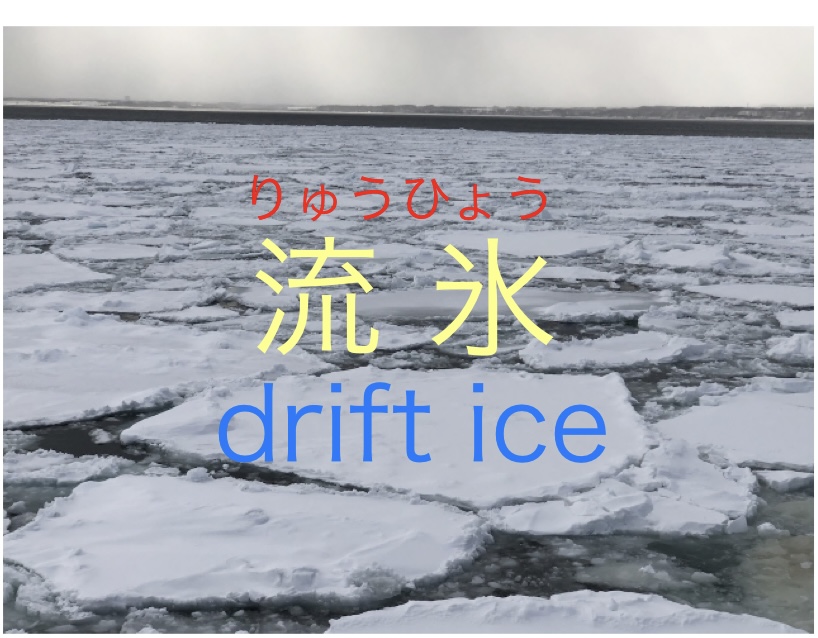

北海道に流氷が来ましたね。
流氷は、海の水が凍って流れつくことです。
2023年(令和5年)2月2日の午前、北海道にある網走気象台は、気象台から流氷を見ることができたとして、「流氷初日」の発表をしました。
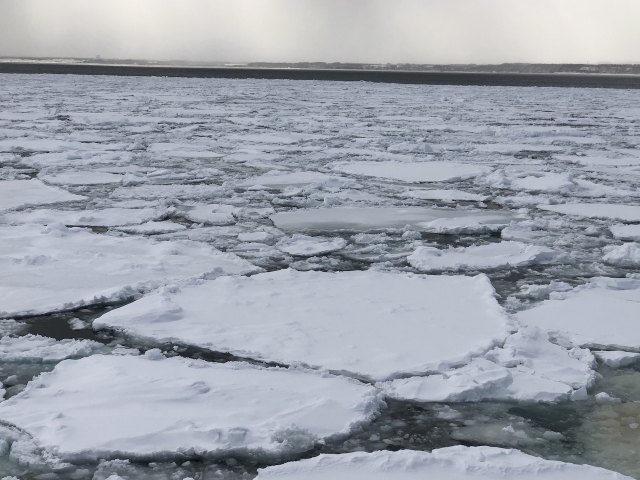
流氷初日というのは、北海道の沿岸から流氷を見ることができた日のことです。例年は、1月中旬から1月下旬にかけて見ることができます。
今年2023年の流氷初日は、例年よりも10日ほど遅く見ることになりました。
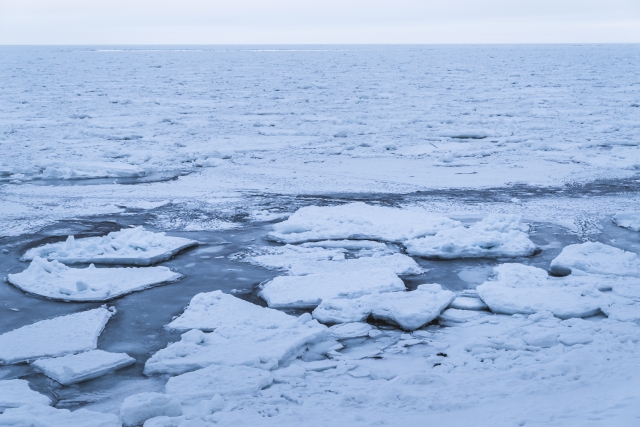
普通、水は、温度が0度になると凍りはじめます。しかし、海の水には、塩分が含まれていますので、氷点下1.81度にならないと凍りません。海水は凍りにくいものです。
しかし、北海道から東に広がり、ロシアに続くオホーツク海は、他の海に比べると、塩分が少し薄くなっています。それは、ロシアのシベリアにあるアムール川からたくさんの水がそそいでいるからです。
流氷は、最初、ロシアのシベリア付近にあるシャンター湾の近くで、できはじめます。
流氷は、海の水の流れである海流と、季節風によって、だんだん日本に近づいてきます。
流氷は、できはじめてから約2か月程の時間をかけて、1千メートルもの長さの距離を少しずつ水が凍ることによって、流氷になり、日本に近づいてきます。
流氷が北海道に到着する前に、漁船は、陸にあげられ、休漁に入ります。春になって海が元にもどるまでしばらくの間、北海道の海はしばらく眠りにつきます。
テレビニュースにすすむ(そとにあるページ)
知床 Shiretokoにすすむ(このブログにあるページ)
変身する水にすすむ(このブログにあるページ)
drift ice
Drift ice is sea water that freezes and flows.
On the morning of February 2, 2023 (Reiwa 5), the Abashiri Meteorological Observatory in Hokkaido announced that it was possible to see drift ice from the observatory, and that it was the “first day of drift ice.
The first day of drift ice is the day when you can see the drift ice from the coast of Hokkaido. You can usually see them from mid-January to late January.
This year, 2023, we were able to see the first day of drift ice about 10 days later than usual.
Normally, water begins to freeze when the temperature reaches 0 degrees. However, since sea water contains salt, it does not freeze until the temperature drops to minus 1.81 degrees. Sea water does not freeze easily.
However, compared to other seas, the Sea of Okhotsk, which extends from Hokkaido to the east and extends to Russia, is slightly less salty. That’s because a lot of water comes from the Amur River in Siberia, Russia.
Ice floes first begin to form near Shanter Bay, near Siberia, Russia.
Drift ice gradually approaches Japan due to ocean currents and seasonal winds.
Drift ice takes about two months from the time it begins to form, and the water gradually freezes over a distance of 1,000 meters, turning it into drift ice and approaching Japan.
Before the drift ice reaches Hokkaido, the fishing boats are brought ashore and go into rest. The sea in Hokkaido goes to sleep for a while until the sea returns to normal in spring.


コメント