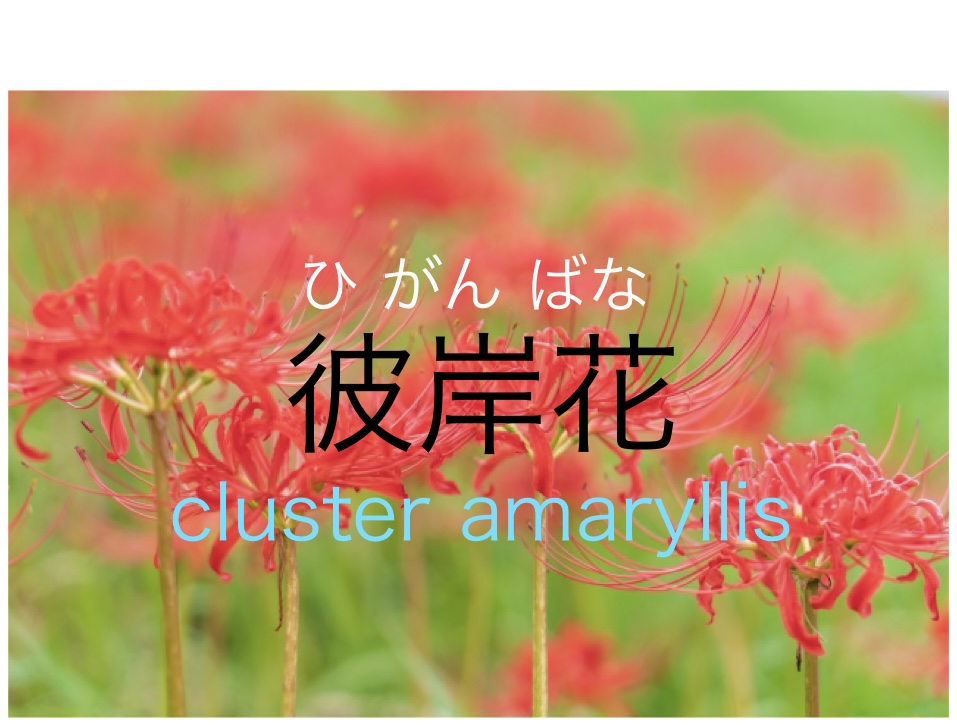

彼岸花はきれいですよね。
彼岸花は、夏の終わりから秋にかけて咲くきれいな花です。
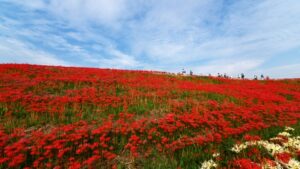
彼岸花の彼岸とは、仏教の言葉です。
仏教というのは、ブッダという人がインドで始めた宗教です。インドから中国などを通って日本に伝わりました。日本では、仏教を信じている人がたくさんいます。
仏教では、人はなくなると、「彼岸」や「極楽浄土」などと呼ばれる、三途の川を挟んだ世界に行くとされています。
なくなった祖先たちはそこにいて、そこは、はるか西にあると考えられていました。
彼岸花の別名はたくさんあります。その中で一番有名なのは、曼珠沙華です。
この言葉も仏教の言葉で、「天上の花」という意味をもっています。
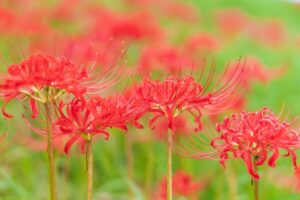
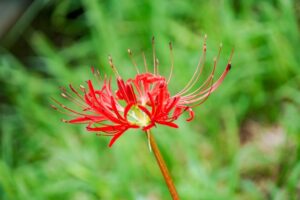
彼岸花の花は、一本の真っ直ぐな緑色の茎の先端に、直径約10センチメートル前後の花を咲かせます。
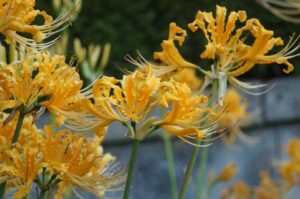
花びらの色は、品種改良が進み種類によって違います。
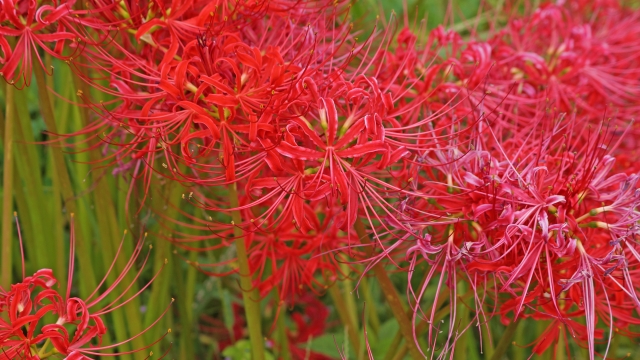
しかし、日本で多くみられる彼岸花の色は赤です。
彼岸花には、花・茎・葉・球根、すべての部分に毒があります。中でも特に強い毒をもつのは球根の部分です。
植物に含まれるのは、主にアルカロイドという毒です。
アルカロイドという毒の種類はとても多く、彼岸花には約20種類のアルカロイドが含まれています。
誤って食べてしまうと吐き気や下痢を起こします。
重症の場合は、麻痺を起こして死んでしまうこともあります。
cluster amaryllis
Higanbana are beautiful flowers that bloom from late summer to autumn.
The word “higan” in higanbana is a Buddhist word.
Buddhism is a religion initiated in India by a man named Buddha. It was introduced to Japan from India through China and other countries. In Japan, there are many people who believe in Buddhism.
According to Buddhism, when people die, they go to the world across the Sanzu River, which is called “Higan” or “Paradise”. It was believed that our deceased ancestors were there, and that it was located far to the west.
There are many aliases for higanbana. The most famous of them is manjushage.
This word is also a Buddhist word meaning “flowers in heaven.
The higanbana flower blooms at the tip of a single straight green stem with a diameter of about 10 cm.
The color of the petals varies from species to species due to breeding progress.
However, the color of higanbana most commonly seen in Japan is red.
All parts of higanbana (flower, stem, leaf, and bulb) are poisonous. The most poisonous part is the bulb.
The plant contains mainly alkaloids, which are poisonous.
There are many kinds of alkaloid poisons, and higanbana contains about 20 kinds of alkaloids.
If accidentally eaten, it can cause nausea and diarrhea.
In severe cases, it can cause paralysis and death.
コメント